
What Is It?
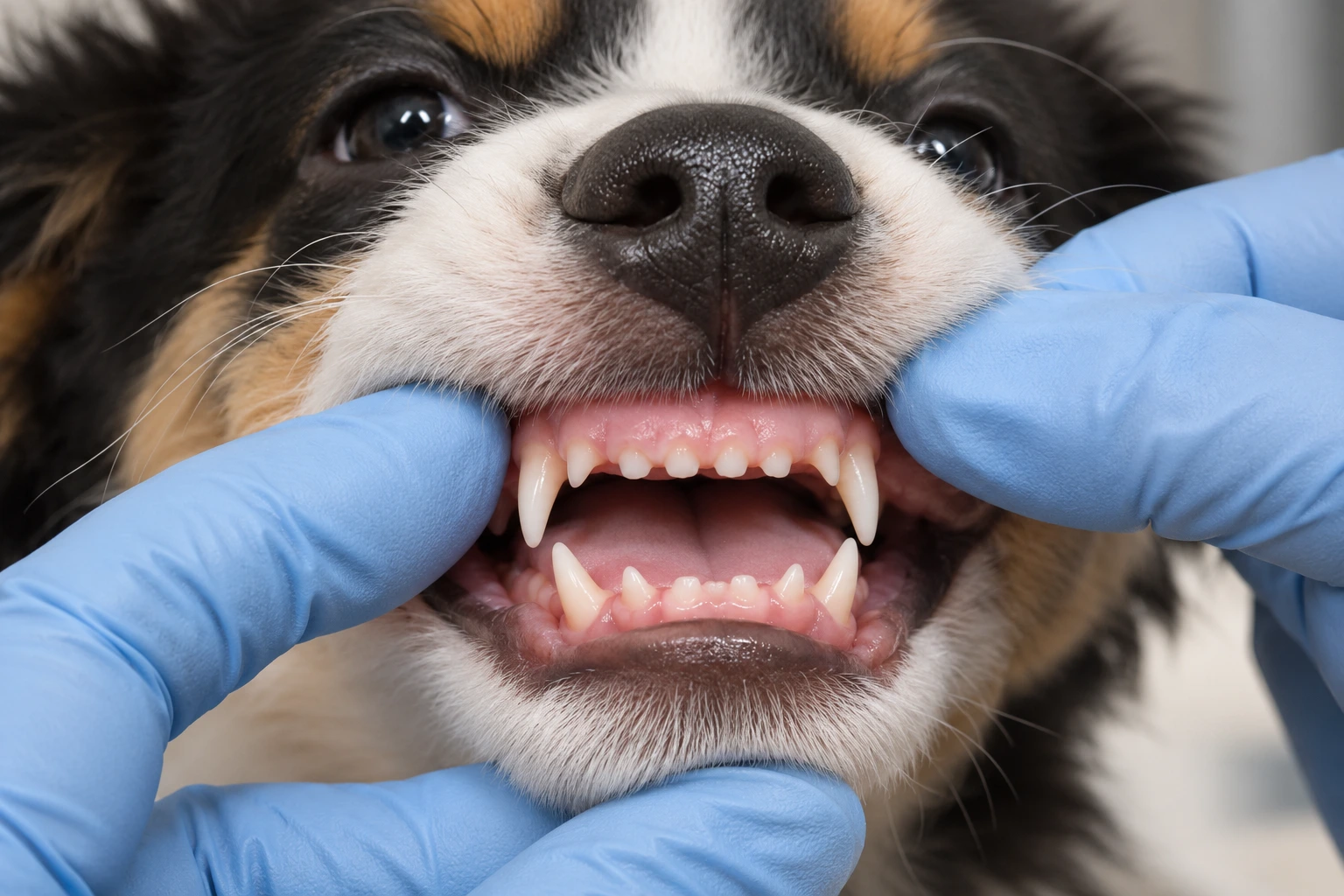
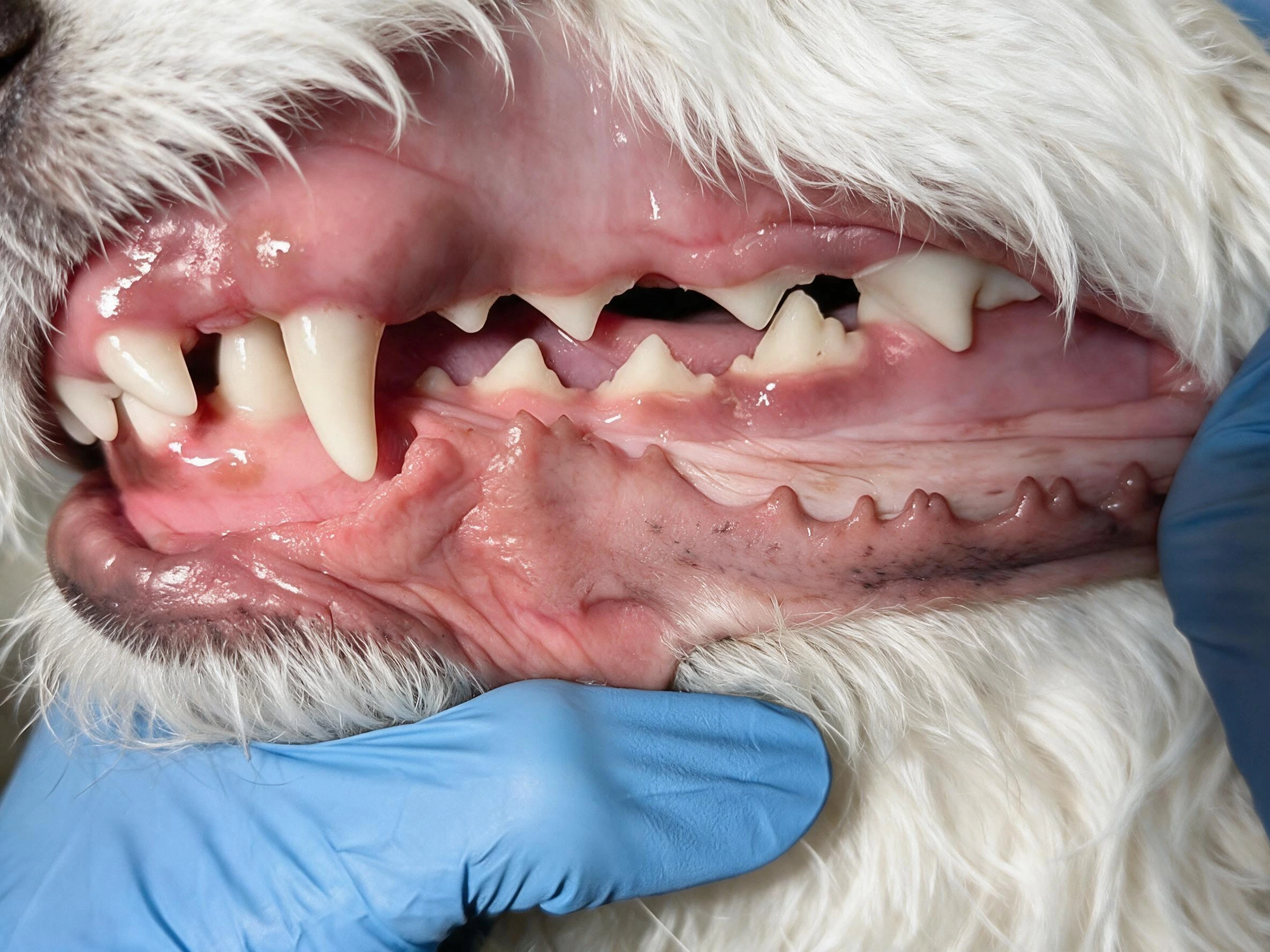
Base narrow canines — also called linguoverted or inverted canines — is one of the most common orthodontic problems seen in dogs. It occurs when the lower (mandibular) canine teeth point inward rather than sitting in their normal, slightly outward position. Instead of fitting neatly alongside the upper teeth when the mouth closes, they press into the roof of the mouth (the palate).
This contact causes chronic pain every time your dog closes their mouth. Over time, it can cause ulcers, deep tissue wounds, and — in severe cases — a hole between the mouth and nasal cavity called an oronasal fistula, which is a serious complication requiring surgical repair.
How Does It Happen?
There are two main causes:
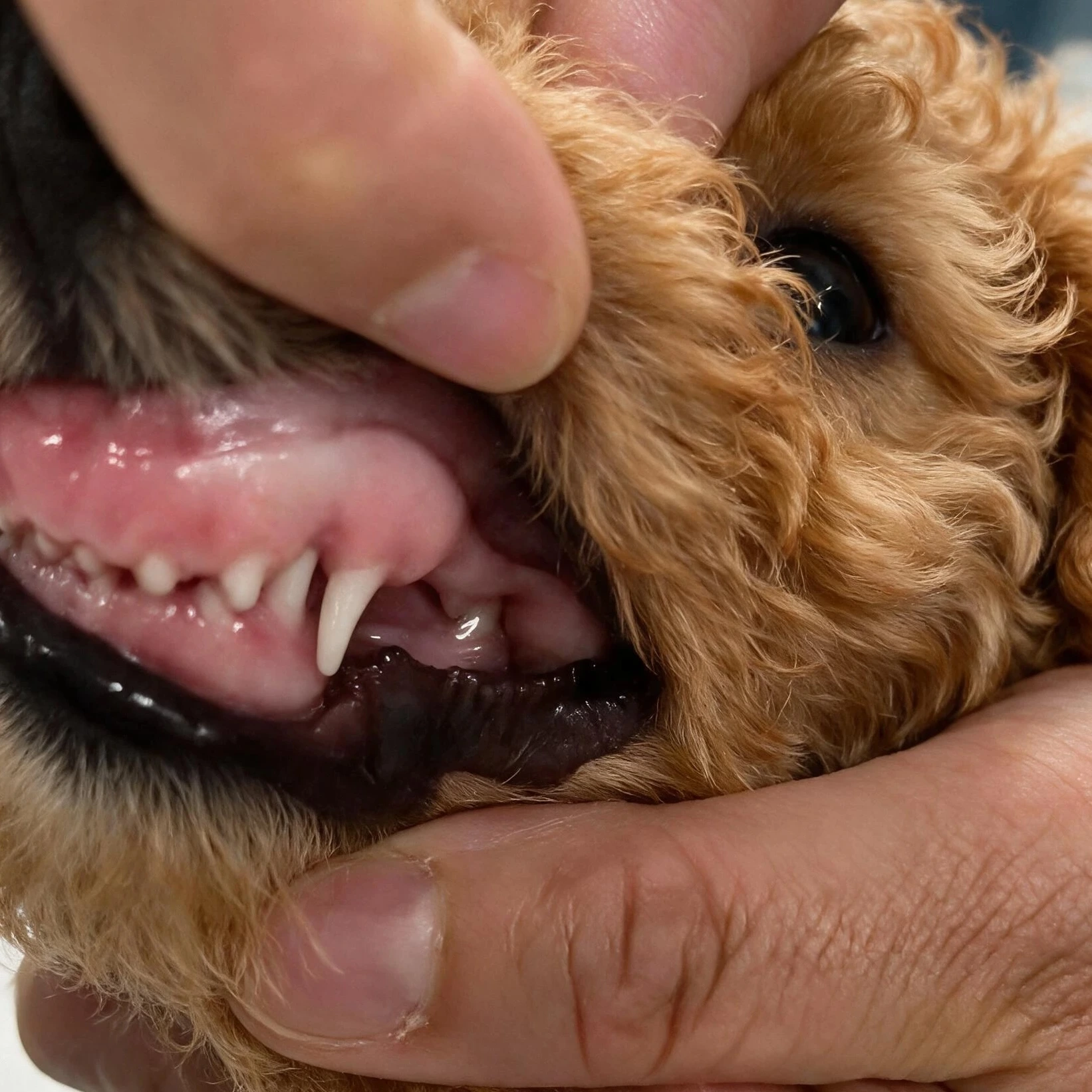
- Retained deciduous (baby) teeth — The most common reason. When baby canine teeth don’t fall out at the right time, they block the adult teeth from erupting in the correct position, forcing them inward.
- Skeletal jaw conformation — A mandible (lower jaw) that is proportionally narrower or shorter than the upper jaw (Class 2 skeletal malocclusion) means the adult canines simply have nowhere to go but inward.
Less commonly, a genuinely narrow mandible on its own can cause the same problem. Certain breeds are predisposed — particularly long-nosed breeds such as Shetland Sheepdogs, Rough Collies, and Shelties, though any breed can be affected. There is a well-recognised hereditary basis to jaw conformation abnormalities, which has important implications for breeding (see below).
What Can Be Done — and When?
Timing is the most important factor. Treatment options change significantly as your dog ages, and earlier intervention generally produces better outcomes.
6–12 Weeks of Age
If the baby canine teeth are visibly pressing into the palate and causing trauma, extraction of the lower baby canines is recommended. This relieves immediate pain and, in some cases, allows the lower jaw to develop more freely — meaning the adult teeth may erupt in a more normal position. This is considered an interceptive step, not necessarily a cure.
5–7 Months of Age (Early Adult Dentition)
This is the critical window. When adult teeth are erupting, they are not yet fully set into bone and can be guided with external forces. Several approaches may be considered:
- Extraction of persistent deciduous teeth* — If baby teeth are still present alongside erupting adult teeth, they must be removed promptly. Even partial retention significantly worsens the final position.
-
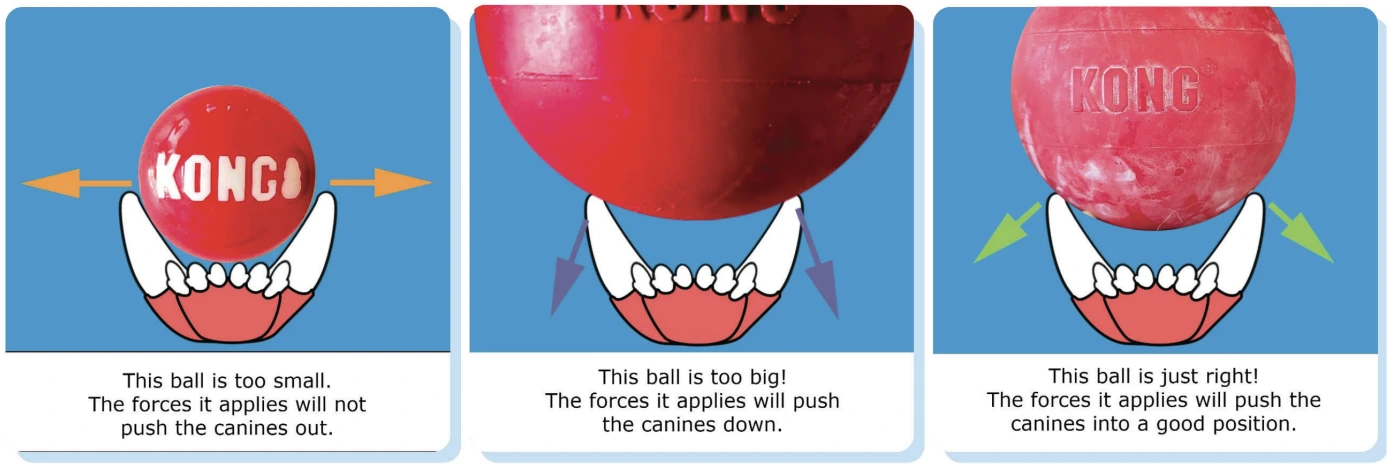
Ball therapy — An appropriately sized firm rubber ball used for active play (15 minutes, three times daily) can apply enough lateral pressure to guide the canines outward as they erupt. Results vary, but for mild cases this is a worthwhile, non-invasive first step.

Ball therapy for linguoverted canine teeth: a ball that is too small provides insufficient outward pressure, while one that is too large directs pressure downwards. A correctly sized ball applies gentle outward pressure to help guide the lower canine teeth into a more normal position. -
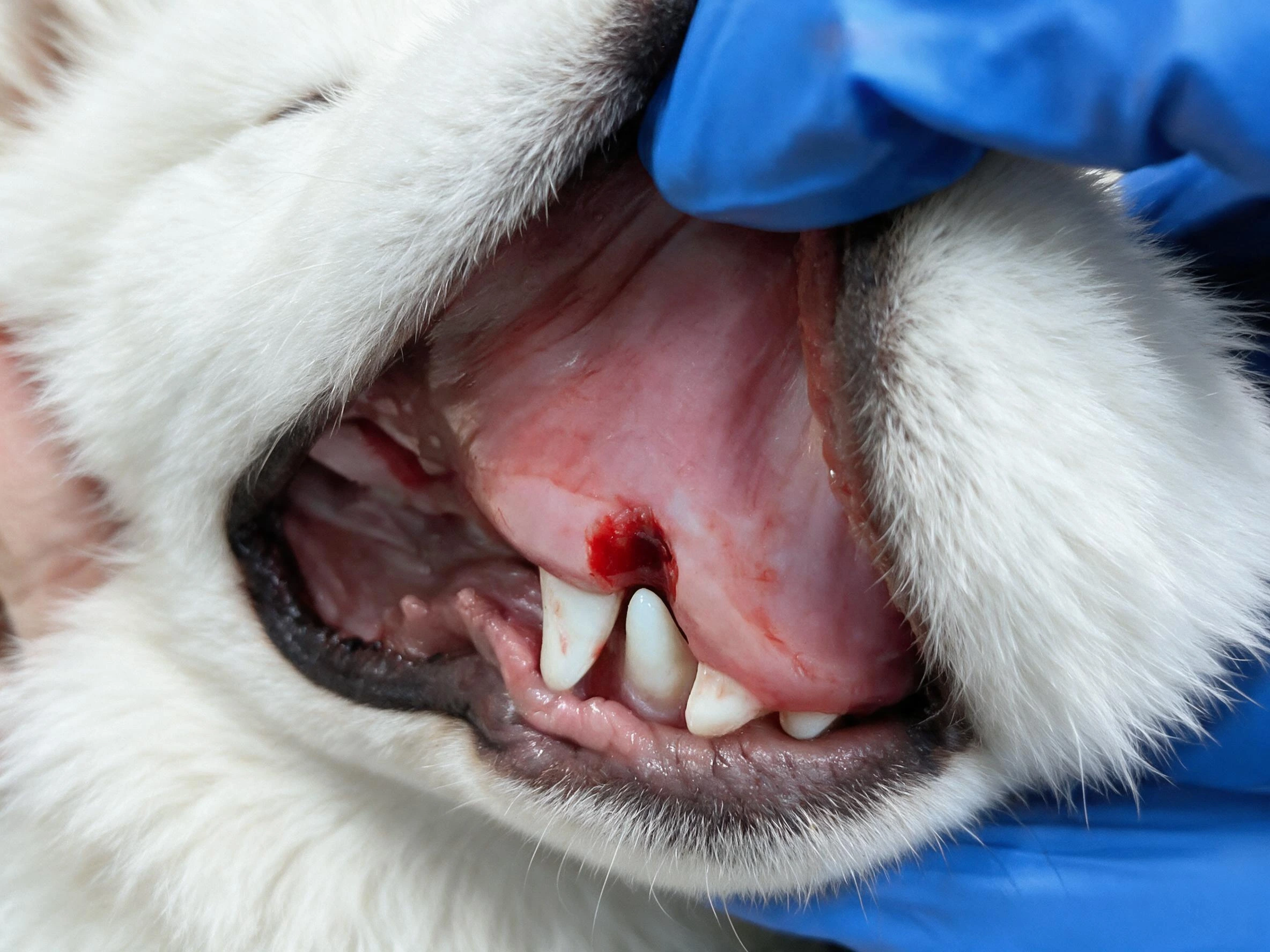
Gingivoplasty — A minor surgical procedure that creates a small guiding ramp of gum tissue between the upper third incisor and upper canine, encouraging the lower canine to erupt outward into the correct space.
Gingivoplasty in a dog with base narrow canines, showing the surgically modified gum tissue adjacent to the upper canine tooth to help guide the lower canine into a more appropriate position. -
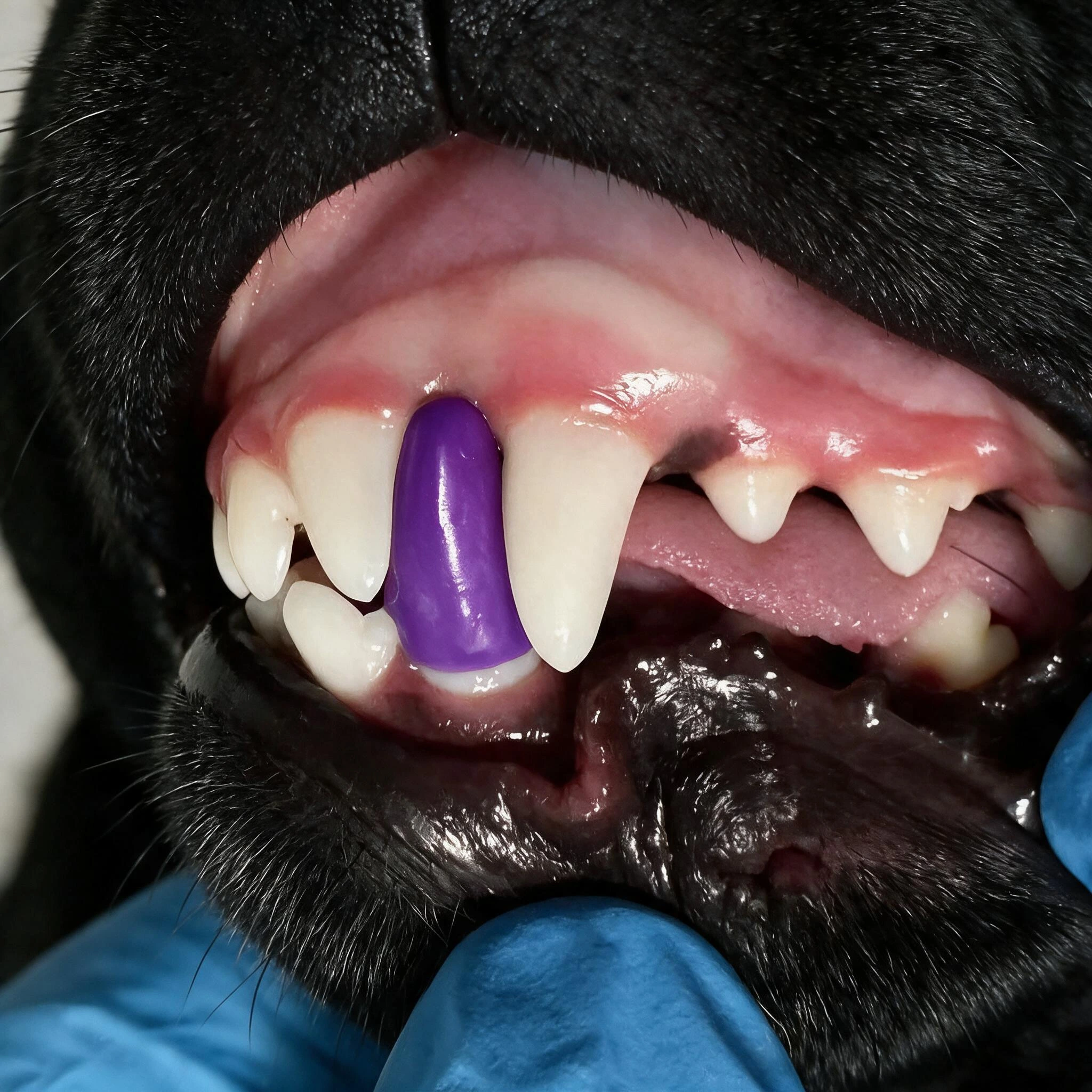
Crown extensions — The aim here is to move the lower canine teeth into a position where they no longer dig into the roof of the mouth. We do this by building up the teeth with acrylic or composite material, shaped so that closing the mouth puts pressure on them in the right direction. Over time, this encourages the lower canines to tip outwards.
If the space between the upper canine and the incisor beside it is a little tight, this approach can sometimes help there too. Some of the pressure can move the upper canine slightly backwards, creating more room for the lower tooth.
Crown extensions are fitted to the lower teeth; an inclined plane is a separate appliance fitted to the upper teeth. For some dogs, the ability to improve that upper gap makes crown extensions the more useful option. Which approach suits your dog depends on their bite and the space available.
An acrylic crown extension fitted to a lower canine tooth to help correct linguoversion. The extension changes the point of contact with the upper teeth, applying gentle outward pressure to guide the lower canine into a more appropriate position.
7–8 Months and Beyond (Definitive Treatment)
If earlier interventions haven’t worked or weren’t performed, definitive treatment options include:
-
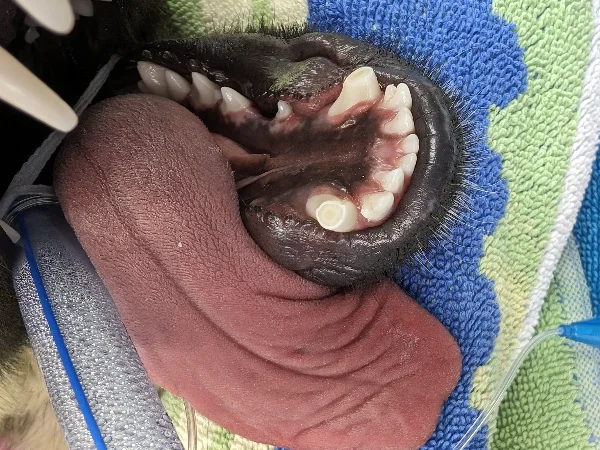
Crown height reduction with vital pulpotomy — The crown of the lower canine is surgically reduced in height so it no longer contacts the palate. The exposed pulp is protected with restorative materials. This procedure preserves the tooth but requires lifelong dental radiographic monitoring.
Crown height reduction with vital pulpotomy. The lower canine tooth has been shortened to prevent traumatic contact with the palate, while the exposed pulp is treated and sealed to preserve the tooth. - Inclined plane — Can still be considered if the teeth have enough mobility remaining.
- Extraction of the lower canines — Removes the problem tooth permanently. No ongoing monitoring is required. Potential cosmetic effects include occasional tongue protrusion (rare), some narrowing of the lower jaw profile, and a small risk of jaw fracture during extraction. In terms of comfort and quality of life, extraction is far preferable to leaving a painful, traumatising tooth in place.
Should I Have This Treated?
Yes. A tooth that contacts the palate every time the mouth closes causes real, ongoing pain — equivalent to biting the inside of your mouth repeatedly, all day, every day. Dogs are stoic and often don’t show obvious signs of pain, but that does not mean they are comfortable.
Left untreated, outcomes range from chronic oral pain and palatal ulceration to oronasal fistula formation (a hole into the nasal cavity), sinusitis, and recurrent infections. All of these are significantly more complex and costly to manage than early intervention.-
Should You Breed From an Affected Dog?
No — this is strongly advised against.
Jaw conformation abnormalities, including the skeletal factors that cause base narrow canines, have a well-established hereditary basis in dogs. Breeding from affected animals risks passing on the same trait to their offspring. The American Veterinary Dental College (AVDC), the European Veterinary Dental College (EVDC), and most national kennel clubs share the position that dogs with hereditary malocclusions should not be used for breeding.
This recommendation applies regardless of whether surgical treatment was successful — correcting the tooth position in one dog does not change the genetics they pass on.
If there is any uncertainty about whether the cause in your dog is hereditary or developmental (e.g. due to retained baby teeth alone), please discuss this with your vet before making any breeding decisions.
Questions?
If you have any concerns about your dog’s teeth or bite, please don’t hesitate to get in touch. Dental issues are easy to overlook but have a real impact on your dog’s daily comfort and quality of life — and most are very manageable when caught early.
Dr Stuart Cunningham BVSc
Personalised Mobile Vet
References
- Wiggs, R.B. & Lobprise, H.B. (1997). Veterinary Dentistry: Principles and Practice. Lippincott-Raven, Philadelphia.
- Verhaert, L. (2012). ‘Orthodontics’, in Niemiec, B.A. (ed.) Veterinary Periodontology. Wiley-Blackwell, Ames, IA, pp. 281–304.
- Niemiec, B.A. (ed.) (2010). Small Animal Dental, Oral and Maxillofacial Disease: A Colour Handbook. Manson Publishing, London.
- Gracis, M. (2014). ‘Orthodontics’, in Tutt, C., Deeprose, J. & Crossley, D. (eds.) BSAVA Manual of Canine and Feline Dentistry, 4th edn. BSAVA, Gloucester, pp. 233–265.
- Hale, F.A. (2009). ‘Juvenile veterinary dentistry’, Veterinary Clinics of North America: Small Animal Practice, 35(4), pp. 789–817.
- American Veterinary Dental College (AVDC) (2019). Nomenclature: Abnormalities of Occlusion. Available at: avdc.org (Accessed: July 2026).
- Advanced Animal Dentistry (2024). Linguoverted Canine Teeth in Pets. Available at: https://animaldental.com.au/linguoverted-canine-teeth-pets/ (Accessed: July 2026).