Welcome to the PMV Hub — a friendly corner of the internet for pet owners who want honest, easy-to-read info without the overwhelm. This is where we post blogs, pet health tips, and real talk about life with cats and dogs. Have a browse at your own pace, and if there’s a topic you’d like us to cover, just let us know via the form at the bottom. We’re always happy to take requests
Annual Injections vs Monthly Chews: A Practical Guide to Parasite Prevention for Dogs in South East Queensland
Dr Stuart Cunningham BVSc
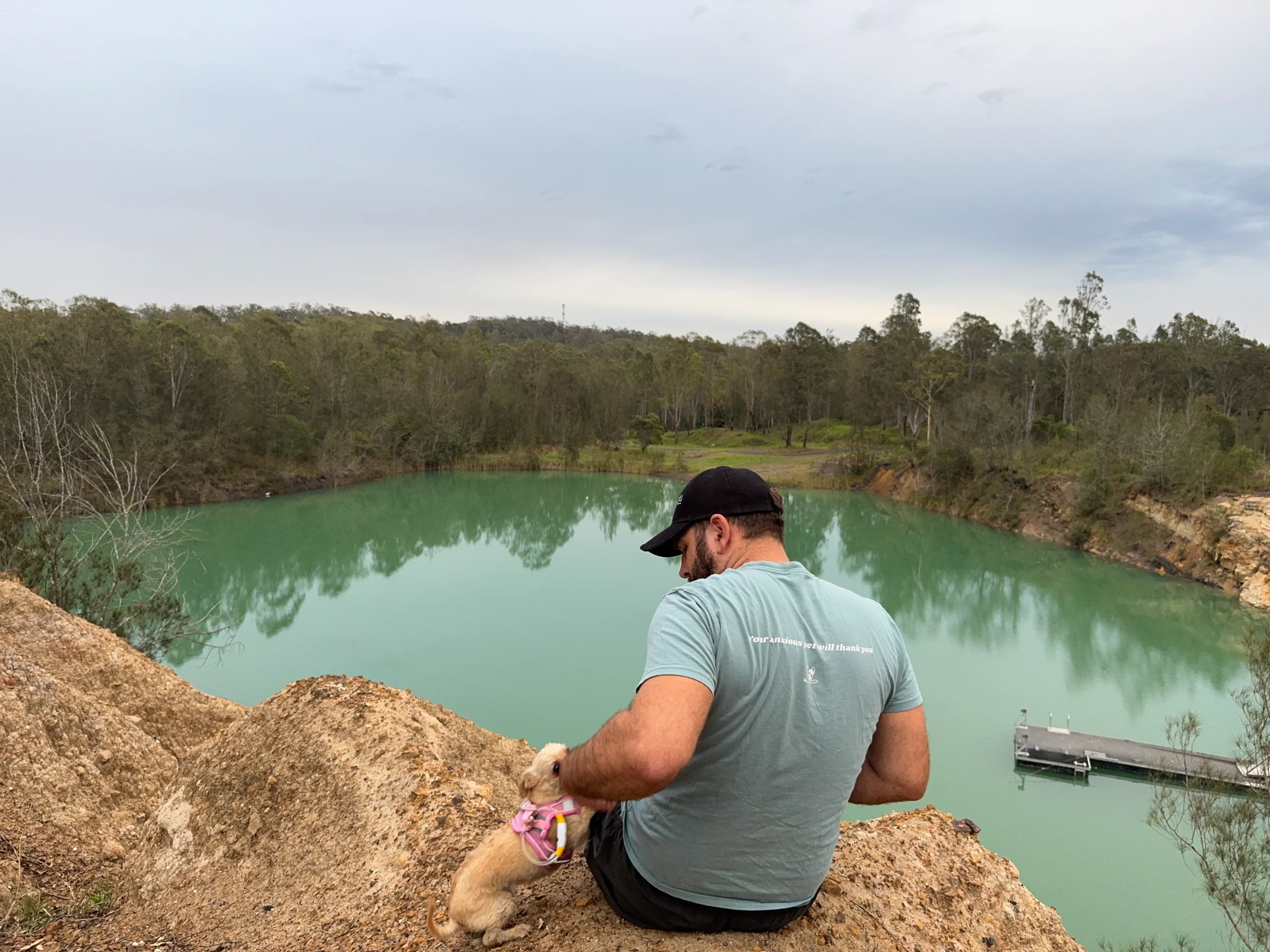
Dr Stu and Reggie enjoying some time outdoors. After Reggie's experience with tick paralysis, consistent parasite prevention is something I take particularly seriously.
Protecting dogs from parasites like paralysis ticks, fleas, heartworm, and intestinal worms is crucial in South East Queensland. This guide compares monthly chews with annual injectable treatments, examining cost, convenience, and reliability. Learn how Personalised Mobile Vet’s Annual Canine Protection Package simplifies preventative healthcare, helping you choose the best, most consistent protection for your dog.
Fleas, paralysis ticks, heartworm and intestinal worms. We all know our dogs need protection against them. But what’s the best way to provide that protection, and is it better to use monthly chews or annual injections?
Living in South East Queensland means parasite prevention is an important part of keeping our dogs healthy. Whether you’re in Brisbane, Ipswich or the surrounding areas, fleas, paralysis ticks, heartworm and intestinal worms are all things we need to consider.
Fortunately, there are some excellent preventative treatments available, including monthly chews, topical products and long-acting injections.
At Personalised Mobile Vet (PMV), we’ve put together an Annual Canine Protection Package that combines the main elements of preventative healthcare into one convenient home visit.
As a mobile vet servicing Brisbane, Ipswich and surrounding areas, our aim is to make routine veterinary care more straightforward, without the need to organise a separate trip to the clinic.
What are we protecting our dogs against?
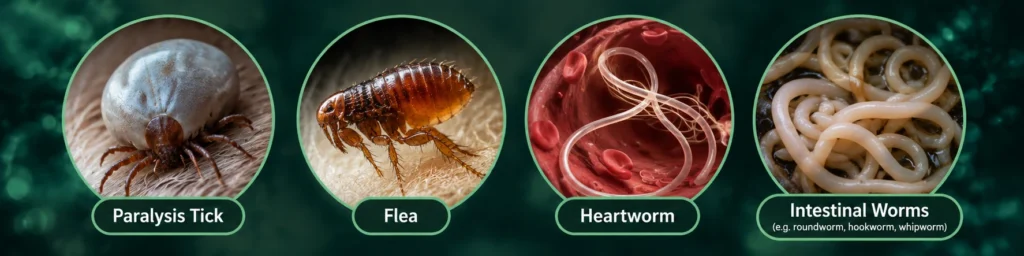
Four important parasite threats to dogs: paralysis ticks, fleas, heartworm and intestinal worms.
Paralysis ticks
Of all the parasites we deal with in South East Queensland, paralysis ticks are arguably the most concerning.
Unlike ordinary ticks, paralysis ticks produce a neurotoxin that interferes with nerve and muscle function.
Affected dogs can develop weakness, difficulty walking, changes to their bark, vomiting or regurgitation, and eventually breathing difficulties.
Severe cases require hospitalisation, sometimes intensive care, and unfortunately not every dog survives.
Although we tend to associate ticks with spring and summer, paralysis tick cases occur throughout the year in Queensland.
Fleas
Fleas are more than an itchy inconvenience.
They can cause significant skin irritation, flea allergy dermatitis and, in heavy infestations, anaemia.
They also play a role in transmitting certain tapeworms.
Heartworm
Heartworm is transmitted through mosquito bites, not contact with other dogs.
The larvae develop into adult worms that live in the blood vessels of the lungs and potentially the heart, causing serious cardiovascular and respiratory disease.
Heartworm prevention is designed to stop infection becoming established. Treating established heartworm disease is considerably more complicated.
Intestinal worms
Roundworms, hookworms, whipworms and tapeworms can affect your dog’s intestinal health, with some also presenting a risk to people.
Not every worming product treats every type of worm, which is where owners can understandably get confused.
A product described as covering “worms” doesn’t necessarily cover all worms.
Tapeworm, in particular, is often overlooked.
Monthly chews, annual injections and other options
There are several effective ways to protect dogs against parasites, and monthly all-in-one chews and annual injections are certainly not the only two options.
Monthly products such as NexGard Spectra, Simparica Trio and Credelio Plus combine protection against multiple parasites into a single treatment.
Other products, including Credelio, provide more targeted coverage and can be combined with separate heartworm or intestinal worm treatments.
There are also topical treatments, longer-acting oral products and various combinations of preventative medications.
Each has its own advantages, limitations and treatment intervals. Importantly, not every product covers the same parasites, and tapeworm treatment often needs to be considered separately.
The important thing isn’t necessarily which brand or combination you use. It’s making sure your dog has appropriate protection against the relevant parasites, without gaps in treatment.
For our financial comparison later in this article, we’ve used NexGard Spectra because it’s a widely used monthly preventative that provides broad parasite coverage in a single chew.
That gives us a practical reference point for comparing monthly prevention with our Annual Canine Protection Package.
It doesn’t mean NexGard Spectra is the only alternative, or that other products are less effective.
There are plenty of effective options available, and we’re happy to discuss which combination best suits your dog, your circumstances and your budget.
Monthly chews work. The challenge is remembering them.
Monthly preventative treatments can be an excellent option.
But they also rely on us administering them every month, at the correct interval, in the correct dose, and making sure the dog actually swallows them.
That last point is worth mentioning.
Some dogs will happily eat anything you put in front of them. Others are remarkably skilled at accepting a tablet, wandering off and discreetly depositing it somewhere behind the couch.
And then there are the more ordinary problems.
We forget. We run out. The order is delayed. We think we gave it last week, but perhaps that was the month before.
None of these situations is particularly unusual.
The problem is that parasite protection relies on consistent administration, and a missed or unsuccessful dose can create an avoidable gap.
That doesn’t mean monthly chews are a poor option. Far from it. For owners who administer them reliably, they can work extremely well.
But it does mean there’s a human element involved, twelve times a year.
Reggie taught me this the hard way
I understand this issue from both sides of the consulting table.
My own dog, Reggie, ended up hospitalised with tick paralysis when her Bravecto treatment was in transit.
Meet Reggie. A few days overdue for her tick prevention was all it took for her to end up hospitalised with tick paralysis. A rather personal reminder of why consistent parasite protection matters.
And in that gap, she developed tick paralysis.
As a veterinarian, I was well aware of the risks. I knew the importance of prevention. I’d organised her next treatment.
But knowing what needs to be done and having the medication administered on time are two different things.
Reggie needed hospitalisation, and it was an experience I’d much rather neither of us had gone through.
To be clear, a dog doesn’t necessarily become completely unprotected the moment a product reaches its scheduled redosing date. But once we’re beyond the recommended interval, we can no longer rely on the protection demonstrated for that product.
For me, the lesson was straightforward.
The fewer opportunities there are for a gap in protection, the better.
It’s one of the reasons I’m particularly supportive of annual injectable prevention.
So how do annual injections work?
Rather than relying on repeated oral doses throughout the year, long-acting injections provide extended protection following administration.
For dogs, we now have two particularly useful options.
Bravecto Quantum – annual flea and tick protection
Bravecto Quantum is a long-acting injectable form of fluralaner.
One injection provides:
12 months of flea protection
12 months of paralysis tick protection
11 months of brown dog tick protection
It removes the need to administer regular flea and paralysis tick chews throughout the year.
But how does it actually kill ticks?
This is something I think is important for owners to understand.
Bravecto Quantum isn’t a repellent. It doesn’t create an invisible barrier that stops ticks climbing onto your dog, and it doesn’t work like spraying yourself with mosquito repellent.
The active ingredient, fluralaner, circulates in your dog’s bloodstream.
When a tick attaches and starts feeding, it ingests the medication and is killed.
So yes, a dog receiving effective tick prevention can still have a tick attached to them.
That doesn’t necessarily mean the medication isn’t working.
The important part is how quickly the tick is killed.
Paralysis ticks produce a neurotoxin as they feed. The amount of toxin delivered generally increases over time, and clinical signs of tick paralysis commonly develop after several days of attachment, often around three to five days.
However, this timing varies, and signs can develop earlier.
Bravecto Quantum is designed to kill paralysis ticks rapidly, reducing the opportunity for them to deliver enough toxin to cause disease.
This is also why we still recommend daily tick checks.
The medication provides an important level of protection, but it doesn’t stop ticks attaching, and no product completely eliminates the risk of tick paralysis.
Finding and removing a tick early provides another layer of protection.
It’s also worth knowing that Bravecto Quantum takes approximately three days after its initial administration to reach its full demonstrated effect against paralysis ticks. If you’re changing from another preventative, the timing of that transition matters.
Think of it as two approaches working together: medication to kill ticks and regular checks to remove them before they have time to cause trouble.
If your dog develops signs suggestive of tick paralysis, seek veterinary attention immediately, even if they’re receiving tick prevention.
ProHeart – annual heartworm protection
ProHeart is a long-acting moxidectin injection that provides 12 months of heartworm prevention.
Instead of relying on monthly heartworm medication, protection is administered at the veterinary appointment.
For owners, that’s one less recurring treatment to remember.
As with any preventative medication, suitability depends on your dog’s age, health, weight and treatment history. Dogs with uncertain heartworm prevention histories may require testing or additional assessment before treatment.
What about intestinal worms?
This is where it’s important to be clear about what annual injections do and don’t cover.
Bravecto Quantum covers fleas and ticks. ProHeart covers heartworm.
Neither replaces routine intestinal worming.
Dogs still require appropriate treatment for intestinal parasites, including tapeworms.
And tapeworm deserves particular attention because NexGard Spectra, despite its broad parasite coverage, doesn’t cover tapeworm either.
This is why we include a year’s supply of intestinal worming treatment in our Annual Canine Protection Package.
There isn’t currently an annual injection available that provides the full range of routine intestinal worm protection we’re looking for.
Give it time. Veterinary medicine has come a long way, and perhaps we’ll eventually have an injectable option for that too.
Until then, intestinal worming remains a separate part of your dog’s preventative healthcare, administered at the appropriate intervals.
The frequency and type of treatment depend on your dog’s age, lifestyle and exposure risks.
What’s included in PMV’s Annual Canine Protection Package?
We’ve combined the main components of annual preventative care into one appointment, with the remaining intestinal worming medication supplied for use throughout the year.
Your package includes:
Full veterinary consultation and health assessment: A proper examination and an opportunity to discuss any concerns about your dog’s health, behaviour or wellbeing.
Annual vaccination: Appropriate vaccination as determined by your dog’s vaccination history and individual requirements.
ProHeart injection: 12 months of heartworm prevention.
Bravecto Quantum injection: 12 months of flea and paralysis tick protection.
A year’s supply of intestinal worming treatment: Including appropriate tapeworm coverage, with instructions for administration throughout the year.
The idea isn’t to suggest that every aspect of parasite prevention can be dealt with by an injection.
It can’t.
The idea is to simplify as much of the process as possible, reduce the risk of missed doses, and make sure the remaining treatments are accounted for.
There’s also the convenience of having everything done at home.
For dogs that find clinic visits stressful, particularly anxious or elderly dogs, a home visit can make routine preventative healthcare a much more comfortable experience.
As a house call vet servicing Brisbane and Ipswich, we can carry out your dog’s annual health assessment, vaccinations and preventative injections in their familiar surroundings.
It’s one less appointment to organise, one less car trip, and one less thing to worry about.
Why package everything together?
We’ve put together PMV’s Annual Canine Protection Package for two reasons: to make preventative healthcare simpler and to make it better value.
Rather than organising separate appointments, vaccinations, injections and worming products throughout the year, we’ve combined them into one annual veterinary visit, with the remaining intestinal worming supplied to administer at home.
And because we’re providing these services together, the package itself is discounted compared with purchasing the same items individually through PMV.
That’s an important distinction from our comparison with monthly NexGard Spectra.
There are actually two different financial considerations.
Firstly, our annual package costs less than purchasing its included services and medications separately through PMV.
Secondly, when compared with an equivalent annual preventative healthcare routine using monthly NexGard Spectra, our package is also cheaper for dogs in certain weight ranges.
For larger dogs, the injectable option becomes more expensive than the monthly chew alternative. That’s largely because the amount of injectable medication required increases with body weight.
We’re upfront about that because the annual package won’t necessarily be the cheapest option for every dog.
But even where it costs more, there are still practical benefits: fewer treatments to remember, less reliance on monthly dosing, and the reassurance that your dog’s main parasite prevention has been administered correctly at their annual appointment.
The aim isn’t simply to sell everything together. It’s to make preventative healthcare more straightforward, more reliable and better value than purchasing the package components separately.
Annual injections vs monthly chews: What does it cost?
From Chihuahua to Great Dane, a dog’s size and weight influence the cost of parasite prevention.
Convenience is one thing, but cost matters too.
We’ve compared PMV’s Annual Canine Protection Package against purchasing 12 months of NexGard Spectra, additional intestinal worming including tapeworm coverage, a standard veterinary consultation and C5 vaccination.
NexGard Spectra was selected as a representative, widely used monthly preventative. Other products and combinations are available, and their costs will vary.
Our comparison uses Petbarn’s advertised non-member NexGard Spectra pricing from 29 October 2026, together with the other costs detailed in our calculations.
The table below shows the annual costs across different weight ranges.
Dog weight
Monthly chew option (annual total)
PMV annual package
Difference
Up to 10.9 kg
$689.00
$462.20
Save $226.80
11–20.9 kg
$717.00
$636.38
Save $80.62
21–30.9 kg
$787.00
$698.45
Save $88.55
31–40.9 kg
$849.00
$875.57
Package costs $26.57 more
41–50.9 kg
$849.00
$1,042.43
Package costs $193.43 more
51–60.9 kg
$957.00
$1,179.16
Package costs $222.16 more
All prices include GST. The monthly option is an annualised comparison, not a monthly payment plan. Prices and individual treatment requirements may vary. Weight brackets and retail treatment quantities require final verification before publication.
Based on these figures, our annual package is less expensive for dogs under approximately 31 kg.
For larger dogs, the annual injections become more expensive, and I think it’s important to be upfront about that.
The cost of injectable medications increases with body weight, and for some larger dogs, monthly chews will be the cheaper option.
But price isn’t the only consideration.
With annual injections, the main flea, paralysis tick and heartworm treatments are administered at the appointment. You’re no longer responsible for remembering, purchasing and successfully administering those treatments every month.
For some owners, particularly those with busy schedules, dogs that are difficult to medicate, or a history of missed doses, that additional reliability is worth paying for.
For others, monthly prevention will remain the more practical and economical choice.
Both are reasonable options when used correctly.
Is annual injectable prevention safer?
It’s important to distinguish between the safety of a medication and the reliability of its administration.
Annual injections aren’t automatically safer medications simply because they’re injections.
Like oral preventatives, they have potential adverse effects and aren’t necessarily suitable for every dog.
Their main practical advantage is that they remove repeated opportunities for missed or unsuccessful dosing.
Once administered correctly, you don’t have to wonder whether the dog spat out the tablet, whether the delivery will arrive on time, or whether you’ve remembered this month’s treatment.
That can make a meaningful difference to the consistency of protection.
It doesn’t mean annual injections are completely foolproof, and it certainly doesn’t eliminate the need to check your dog for ticks.
But it does remove several avoidable variables.
And what about cats?
Cats are not little dogs.
Their physiology, medication tolerances, parasite risks and available preventative treatments are different.
So while this package is specifically designed for dogs, we also provide preventative healthcare and parasite protection for cats, using products and schedules appropriate to them.
Please don’t assume a dog product can be used on a cat. Some canine parasite treatments can be extremely toxic to cats.
So which option would I recommend?
There isn’t one answer for every dog or every owner.
If you’re organised with monthly medication, your dog takes it reliably and you’re comfortable maintaining that routine, monthly chews remain an excellent option.
If you’d prefer to reduce the number of treatments you need to remember, or you’ve experienced the frustration of missed doses, delayed deliveries or tablets that mysteriously disappear, annual injections are well worth considering.
For smaller dogs, our package can also represent a worthwhile financial saving.
For larger dogs, it may cost more, but you’re paying for a different approach to managing prevention.
My preference is to make preventative healthcare as straightforward and reliable as possible.
Because in South East Queensland, particularly where paralysis ticks are concerned, consistency matters.
Reggie is a fairly personal reminder of that.
Annual parasite protection, delivered to your door.
If you’re looking for a mobile vet in Brisbane or Ipswich, Personalised Mobile Vet provides convenient, professional veterinary care in the comfort of your home.
Our Annual Canine Protection Package combines your dog’s health assessment, vaccinations, annual parasite injections and intestinal worming into one discounted package.
Whether you have an anxious dog, an elderly pet or simply prefer the convenience of an at-home vet appointment, we’re happy to discuss the options and help you decide what works best.
Get in touch to arrange your dog’s annual preventative healthcare appointment.
Dr Stuart Cunningham BVSc is the founder of Personalised Mobile Vet, caring for dogs and cats across Greater Brisbane and South East Queensland.
He comes to you, with no time limits. Your pet gets time to relax, so symptoms don’t stay hidden, and your home gets assessed, which plays a big role in some diseases. His recommendations are never clouded by KPIs, so he gets to practise ethical medicine based solely on the pet’s needs, not sales targets.
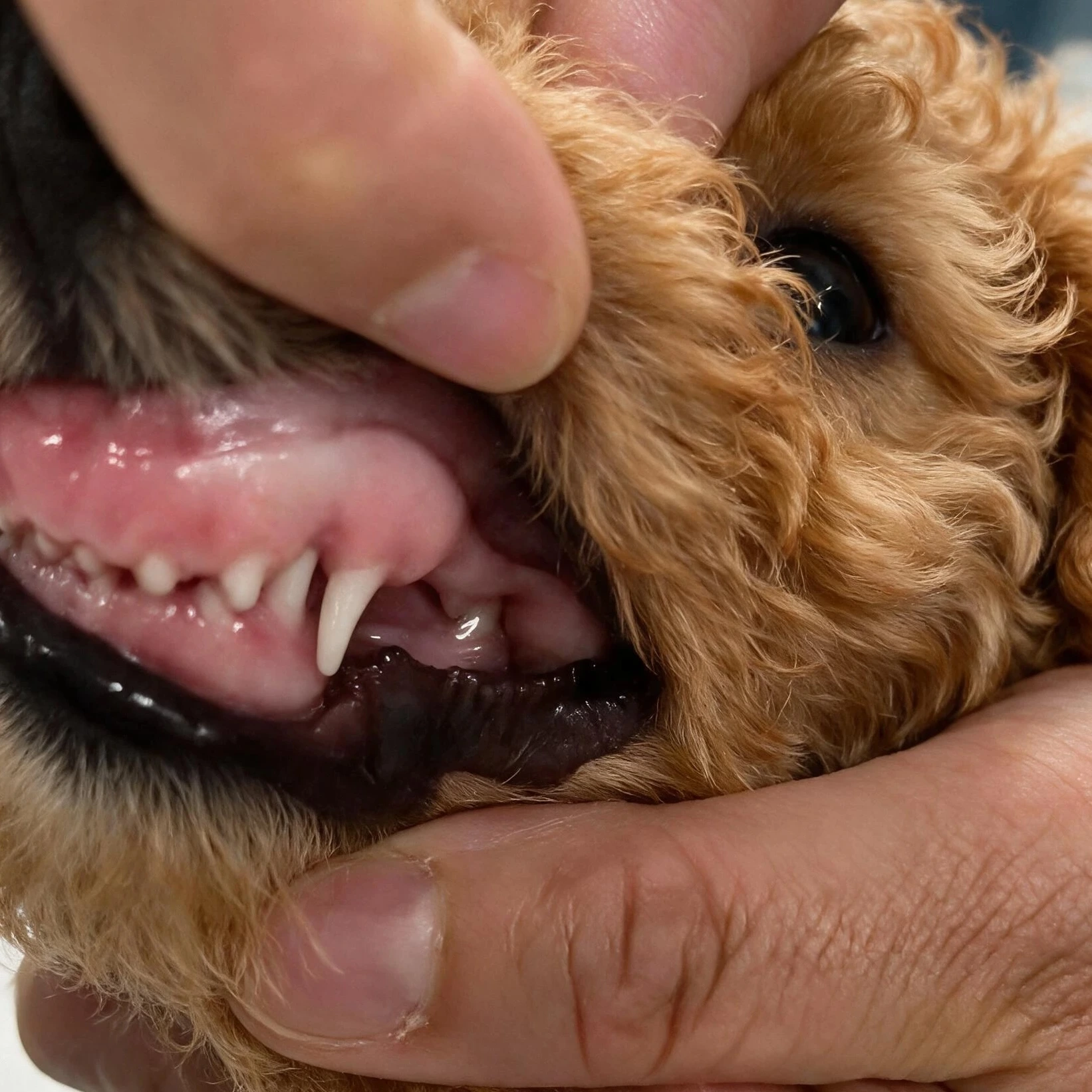
Puppy canine teeth usually change between four and six months of age, but retained baby teeth and abnormal tooth positioning can cause problems. Dr Stu explains what normal dental development looks like, what signs owners should watch for, and when a veterinary dental examination is worthwhile.
Base narrow canines (linguoverted canine teeth) are a common dental problem in dogs that can cause significant pain and damage to the roof of the mouth. Learn what causes this condition, how to recognise it, and why early diagnosis and treatment are essential for your dog’s long-term dental health.
Wish your cat could tell you what’s wrong? Cats are not little dogs. They are solitary, territorial animals with a subtle language most owners never learn. Here are the signs of an unhappy cat, what your cat needs from your home, and what a home visit can show that a clinic can’t.
To provide the best experiences, we use technologies like cookies to store and/or access device information. Consenting to these technologies will allow us to process data such as browsing behaviour or unique IDs on this site. Not consenting or withdrawing consent, may adversely affect certain features and functions.
Functional
Always active
The technical storage or access is strictly necessary for the legitimate purpose of enabling the use of a specific service explicitly requested by the subscriber or user, or for the sole purpose of carrying out the transmission of a communication over an electronic communications network.
Preferences
The technical storage or access is necessary for the legitimate purpose of storing preferences that are not requested by the subscriber or user.
Statistics
The technical storage or access that is used exclusively for statistical purposes.The technical storage or access that is used exclusively for anonymous statistical purposes. Without a subpoena, voluntary compliance on the part of your Internet Service Provider, or additional records from a third party, information stored or retrieved for this purpose alone cannot usually be used to identify you.
Marketing
The technical storage or access is required to create user profiles to send advertising, or to track the user on a website or across several websites for similar marketing purposes.